


Blue Technology
At SplashLab, we apply engineering concepts to develop Blue Technology solutions. Our project portfolio includes an ROV (Remotely Operated Vehicle) configured for underwater inspection and imaging, and a surface prototype designed for the mechanical removal of debris. Recently, we integrated the development of a weather station for real-time environmental data acquisition and analysis. The entire process is rooted in Problem-Based Learning (PBL), where STEM skills serve as the foundational tool to convert oceanic challenges into functional technical solutions.
ROV II
(Remotely Operated Vehicle)
The Robótica XL Club has recovered and evolved the legacy of the ROV4all project, in which our school previously collaborated. Building on that foundation, 9th-grade students (lower secondary) optimized the original design by integrating an underwater imaging system and a temperature sensor for environmental monitoring.
With a 10-meter umbilical cable defining its operating range, this ROV converts theoretical concepts into real exploration tools, allowing the team to collect data and observe the marine ecosystem autonomously.
Interactive Image: ROV Structure
Interactive Image: ROV Control Console
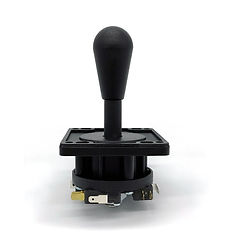
For this project, we acquired an underwater ice fishing camera featuring a 4.3" monitor and a 30m cable; an 8-way joystick; and two ON-OFF push buttons.



ROV4all is an ocean literacy initiative developed by the Madeira Ocean Observatory (OOM/ARDITI), designed to democratize access to marine exploration. The project focuses on building low-cost underwater vehicles (ROVs), enabling schools and educational communities to assemble and operate their own research tools. By combining engineering and science, ROV4all transforms the study of the sea into a hands-on experience, empowering students to monitor and understand underwater ecosystems.
Access the full ROV4ALL project:
SURFACE CLEANING BOAT
Unlike the previous project, the development of the surface cleaning boat by the Robótica XL Club students was born from a process of complete discovery and experimentation. Without a pre-established plan, these 9th-grade students faced the challenge of designing from scratch, exploring fundamental concepts of hydrodynamics, buoyancy, and strategic weight distribution to ensure the vessel's stability.
The project's control architecture also evolved through experience: the initial idea of an Arduino and infrared-controlled system was replaced by radio frequency (RF) transmission, allowing for greater range, faster response times, and increased operational efficiency in open environments.
Interactive Image: Surface Cleaning Boat Structure
Circuit Diagram

Code for the Arduino and Infrared Sensor Version
For the final project, we acquired a radio remote control with a receiver for 3 motors, a 5V gear motor, and two 7.4V underwater thrusters.


AND NOW?
The ROV and the surface cleaning boat have proven that our Robótica XL club students know how to navigate ambitious waters. The next step is to ensure these inventions gain a new lease on life in the hands of younger students. In an exercise of technical mentorship, the veterans are now passing the torch to the recruits, ensuring the prototypes withstand the ultimate test: the hands-on enthusiasm of those taking their first steps in these technical choreographies.

Acquired through ProBleu funding, our weather station (SparkFun Kit) is already assembled. However, for now, it is just a skeleton of sensors and wires waiting for a "soul." The next challenge is to infuse it with logic using the micro:bit and integrate it into a meteorology project that allows us to look at the clouds with the rigor of those seeking data, not just shade.

This is a project with great potential, just waiting for those inspired to lead the transition to ESA’s (European Space Agency) “Climate Detectives” project and take our research to new heights. We shall see how the electronics perform in the real world. After all, any robotics enthusiast knows that between what goes well in the simulator and what actually happens when the switch is flipped, there is a chasm of unforeseen challenges—and that is exactly where true learning happens.
>> Click on the images for more information


